Showing posts with label FAQ. Show all posts

Tuesday, August 14, 2018

Mercury-Free Dentistry in Costa Rica - Our Life in Costa Rica Yr #3

Let's switch it up a little today and talk about dentistry.

“Silver fillings” are really “mercury fillings,” and mercury is highly toxic and the most vaporous of the heavy metals.

Costa Rica has a vibrant dental tourism industry -- that's a fact, but what if you seek holistic dentistry?? Is there anything here for you??

As a person who has not yet had the amalgam removed from my teeth,  that is exactly the question I have been wondering about.

What is amalgam?
Amalgam is a combination of metals that has been the most popular filling material used in dentistry for the last 150 years. Although it sometimes is called "silver amalgam," amalgam actually consists of a combination of metals. These include silver, mercury, tin and copper. Small amounts of zinc, indium or palladium also may be used.


The U.S. was one of the first countries to ratify the Minamata Convention on Mercury, an international treaty to end mercury pollution, in 2013. It was a major victory, but even at that time, a central question was, "Who's going to be responsible for enforcement?" August 2017, that treaty became legally binding, as 50 countries are ratified. Now the U.S. must begin enforcement.

"It's a treaty on all major sources of mercury. Of course, dental amalgam is a major source. It's the largest use of mercury in America.  

Good News!
 Consumers for Dental Choice has successfully facilitated a total ban on dental amalgam for children under 15 and pregnant and nursing women within the European Union (EU), effective July 1, 2018 — a victory that will positively affect half a billion people in 28 countries.


My friend Reenie at the dentist in Costa Rica

This is what Reenie has to say about her experience-
"WOW, I must be the luckiest lady on the planet!! I had been “wishing” for a Biological Dentist that was Mercury FREE & SAFE, did Crowns, fillings and Implants, and one I could hopefully afford!! Found them in Costa Rica ðŸ‡¨ðŸ‡· just outside of San Jose! I got TWO Biological safe Implants, Bone grafting, TWO Crowns, and FIVE mercury free fillings at a FRACTION of the cost in the US! Not only that, but they treated me like Family, even fed me a Vegan lunch, and Victor co owner and manager, took such good care of me making sure to help me arrange my Uber rides and giving me more TLC than I’ve ever gotten from a medical facility in the States and the quality of the work was EXCELLENT!!
“Costa Rican Bio Dental” went ABOVE & BEYOND to make much needed dental work possible for me!! THANK YOU Dr Krista, Victor and ALL the staff at CRBD!! 
This CR bio dentist, can remove mercury fillings with equipment that is safe and will not flood more of it into your body!"


For those of you who are still in the states!

Mercury-Free Dentistry Is Finally Reaching Tipping Point in US

Indeed, the mercury-free dentists in the U.S. were pioneers who understood the folly of placing mercury in a person's head very early on. They were vilified, criticized by their peers and penalized by their medical boards, to the point where their licenses were removed. 

Go to a Mercury-Free Dentist
Insist on mercury-free dentistry, yes. But take it another step — don't go to a dentist who puts mercury fillings in any child or any person. Spend your time, spend your money, only with a mercury-free dentist. How do you find one? Here are several organizations with lists or information:

Dental Amalgam Mercury Solutions (DAMS). (offers a packet of information)

Related Posts Plugin for WordPress, Blogger...

Thursday, July 19, 2018

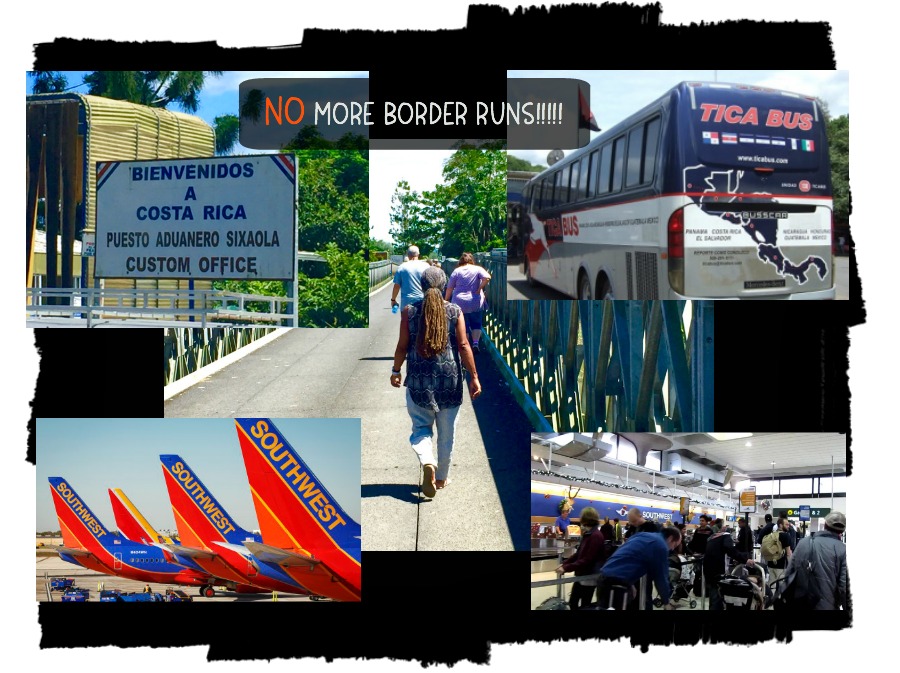
No More Visa/Border Runs!!! - Our Life in Costa Rica Yr #3

Congratulations Devon!!!
As per mentioned before, to avoid your Visa Stamp to expire we have filed your application for residency with the Immigration Department in Costa Rica. Attached please find a copy of your application receipt. Please print it and carry it with a copy of your passport. For your passport, you should  carry a copy of the ID page and the entry stamp. 

Today I received my Numero de Expediente! I no longer have to leave the country every 90 days!! It took about 60 days for me to receive my number (partly due to a delay with my birth certificate) but I did not do any collecting of documents myself instead I signed over power of attorney to my lawyers at Outlier Legal. I did not even have to go to Migración to pick up my number today. It was emailed to me. At this point my papers have been sent for approval and the next step will be to receive my Cédula (which is like a Green Card). 


I have included some important facts about the traveling to Costa Rica as a tourist and Costa Rica Residency laws below.

*Note - This information was taken from the Costa Rica Law website. Please click on the link for more detailed information. There are several other sites available for your use and I have not used their services.

If you were granted a 90 day visa this is the maximum stay allowed by law. If you want to stay in Costa Rica longer then you have leave the country and then come back in to get another 90 days. If you were given a 30 day visa then you can renew that in Costa Rica up to the maximum of 90 days. The amount of time that a Tourist can remain in Costa Rica is based upon their country of origin as follows: 
NO VISA REQUIRED. MAY STAY UP TO 90 DAYS. Those countries designated as No Visa countries may enter Costa Rica without an entry Visa and may remain in Costa Rica for up to 90 days. 
Example: United States, Canada, European Union, Australia, Brazil, Mexico, Peru, Panama, Russian Federation, Denmark, Finland, Japan.
Please pay attention to this next point - Some people are under the impression that you must carry your passport with you at all times! That's a dangerous thing to do because the last thing you want to do is lose or heaven forbid...have your passport stolen --

Your Passport Entry Stamp: While you are in Costa Rica your passport and the immigration stamp that was placed in it when you entered the country is your proof of legal status. The Immigration Department allows you to carry a copy of your passport with the entry stamp so that you can keep your passport in a safe place.

WHAT ARE THE IMMIGRATION RESIDENCY CATEGORIES 
The Immigration Law breaks down the residency categories available under three subsections. The first one is Permanent Residency (Article 77-78) the second is Temporary Residency (Article 79-86) and the final category is defined as Specialized Categories (Article 93-97). The most common initial classification for all initial applicants will be that of Temporary Residents. As such I will start explaining that category for you.
TEMPORARY RESIDENCY:
The majority of application for Costa Rican residency will fall into the Temporary Residency category which is regulated by Article 79 of the Immigration Law and has the following subcategories: 
(1) The Spouse of a Costa Rican citizen as set forth in Article 73 of the law.
(2) Those of religious orders for religions that have been accredited by the Ministry of Foreign Relations and Culture
(3) Executives, Managers, Technical Personnel for Corporations which are established in the country. This may also include those specialized workers that are independent workers but whose technical expertise is required and the Department of Immigration as set forth the criteria to allow that specialty to work in Costa Rica.
(4) Investors
(5) Scientific, Professional and Specialized persons.
(6) Sports figures recognized by the National Council on Sports and Recreation
(7) International Press Correspondents
(8) Rentistas
(9) Pensionados 
Within the Temporary Residency category the most common categories that we process are Pensionados, Rentistas and Inversionistas. If you are planning to retire in Costa Rica and you have a lifetime pension or you receive investment income then you may qualify for either PENSIONADO RESIDENCY or RENTISTA RESIDENCY. If you decide to purchase property or invest in Costa Rican then you may qualify for the INVERSIONISTA.

For more info you can check out their website at Costa Rica Law
That's it for today - I'll catch ya later - time for me to change the date of our flight to Ft Lauderdale which was scheduled for 7/31 (my next visa exit date). Now, I have the option to go back to the states only when I decide I want to go! 

Oh Happy Day!!!
Related Posts Plugin for WordPress, Blogger...

Monday, June 4, 2018

A Conversation w/Dr Carmen Hutchinson Miller Pt3 - What about us?

Video Pt 3- Conclusion
How much do Afro-Costa Ricans really know about the struggle of African-Americans?

“We didn’t want anybody telling us anything about Africa, much less calling us Africans. In hating Africa and in hating the Africans, we ended up hating ourselves, without even realizing it. Because you can’t hate the roots of a tree and not hate the tree. You can’t hate your origin and not end up hating yourself. You can’t hate Africa and not hate yourself.”

-Malcolm X

Below Story Source  Why Our African Identity Matters By Dwayne Wong (Omowale)
One of the challenges that people of African descent continue to face from the days of slavery is the question of identity.
Many of us still struggle with what we perceive to be conflicting national and ethnic identities. This is especially true in America where our historical experiences create what W.E.B. Du Bois described as a “double consciousness.” African Americans are a people that were ripped from the African continent and most still know very little about their African roots, so many African Americans simply do not see themselves as Africans. Yet, centuries of discrimination and being treated as second-class citizens has also taught African Americans that they still are not fully American either. In fact, the history of African Americans up until the present has largely been a history of struggling to be accepted by America.

 This was largely done by design. The slave masters stripped Africans of their names, their languages, their culture and customs, and of their history. Not only this, but Africa has always been depicted as a negative place filled with savages and cannibals. Generations of African people living in the Americas only knew of Africa as the “Dark Continent.” Pro-slavery propaganda insisted that it was actually a benefit for an African to be taken away from their African homeland and this was a view even some Africans came to accept. 
We are the only group of people that came to the Americas by force. 
We did not leave Africa in search of a better life or in search of the American Dream. If anything, we actually lost a better standard of living by being taken to America.When the plague was devastating Europe, civilizations such as Mali and Songhai were thriving in Africa. Today we still view Africa as a “Dark Continent” which is filled with misery, poverty, and starvation. 
Secondly, we have the richest and most diverse background of any other ethnic group in the Americas. When we look at our historical roots we can trace them to various kingdoms such as Songhai, Mali, Asante, Dahomey, Kongo, Benin, Oyo, Futa Jallon and Kuba. Most African people in the Americas have a basic understanding of slavery and what that entailed, but our history is much more complex than that.
Finally, the term African is a term that connects African Americans to a global community of people of African descent that are connected by a common history and a common experience. Whether you are Jamaican, Guyanese, Trinidadian, Ghanaian, Nigerian, or Kenyan you have felt the sting of British colonialism. Haitians, Martiniquans, Senegalese, and Guineans have all felt the sting of French colonialism. Brazilians, Angolans, and Mozambicans have all suffered through Portuguese colonialism. And just about every group of African people in the world has experienced American racism in one form or another. The experiences may differ, but all people of African descent have been victimized by racism and oppression in one form or another.
I think one of the reasons why so many African people living in the United States and the Caribbean do not like thinking of themselves as African is because of the collective ignorance that many of us still have about our African roots and why those roots are important.
When the education system is geared mostly towards European history and culture, and the media depictions of Africa are still largely negative and misinformed, it’s easy to understand why many people of African descent would look at their own ancestral roots negatively.
Read the entire article here

"What about us?" My conversation with Dr Miller below

Related Posts Plugin for WordPress, Blogger...

Friday, June 1, 2018

Two Years to the Day - Our Life in Costa Rica Yr #2

For those of you following our progress this post was done on June 1st but it looks like I only posted it on the Facebook page. However for the sake of continuity I want to have it on the blog as well. 

Costa Rica Residency just got a little closer...📣


And to celebrate a little more. Lavanson got his número de Expediente yesterday (exactly 2 years to the date that we arrived in Costa Rica).  Happy 2 year anniversary to Lavanson!! He no longer has to leave the country every 90 days. This is the initial step for applying. You still have to wait for final approval which could take anywhere from a few months to a year.


And yes, he beat me, but to be fair, he started researching on 4/15 and I had my 1st meeting with my atty on 5/15, so "technically" he hasn't won just yet ðŸ˜Ž but congrats to him for getting this far pretty much on his own (and with the help of his consultant Alberto Ortega!!)


I will be sharing the process he used in a later post so stay tuned!!
Related Posts Plugin for WordPress, Blogger...

Wednesday, May 30, 2018

A Conversation With Dr Carmen Hutchinson Miller Pt2 - Our Life in Costa Rica Yr #2

Video #2
"America" is more than just the United States of America!!


It really bothers many Ticos (a lot) that many of us from the USA call ourselves "American" or say that we are from America. I've been traveling for many years and I actually never heard this complaint until I arrived in Costa Rica.  

After our conversation I wanted to research a little further on the subject of folks from the US referring to themselves as coming from "America." (Since most of the world agrees on a seven-continent view of the world, it is important to remember that we also distinguish a person from South America as South American and a person from North America as North American, more commonly than simply American.) 


Why we call ourselves Americans
and as you will read, it's not exactly all our fault! 😄

Here's some information that I found. 

As the world knocks out political incorrectness left and right, there needs to be something else to fill the void, it seems. This American moniker dispute has really picked up some momentum in the last decade. However, it is important to note that the definition of American has virtually remained the same in the English language for over two centuries now.  
_____________________
A·mer·i·can
əˈmerəkən/
adjective
  1. 1. 

    relating to or characteristic of the United States or its inhabitants.

    "the election of a new American president"
noun
  1. 1. 
    a native or citizen of the United States.
  2. 2. 
    the English language as it is used in the United States; American English.
______________________________________________________________

video #2 here
In the English language, American came to refer specifically to the peoples of British America, and later narrowed down more to include just the newly-formed country of the United States of America – and note that this happened in the late 1700’s. The United Nations recognizes that the term American refers to the people of the United States.
The name of the country is United States of America. Simply put, there are not any other countries (that come to mind, at least) that have the word America within their official name as does the United States of America. There is much less fault to be found in the full name of the USA, but it is the demonym that draws ire in others. 
Thus, when demonyms (demonym or gentilic is a word used for people or the inhabitants of a place. The name of a people's language is usually the same as this word, for example, the "English" (language or people). Some places may not have a word for the people that live there) it is usually from the most unique part of the full official name, such as Mexico (whose official name is United Mexican States) for example, or it is with the geographical component to their name, as in the case of South Africa or Central Africa. The unique part of the United States of America is America, so it became the root of the demonym; since there’s no other country with that word within its name.
As the term was not picked by citizens of the USA to begin with, but rather the USA’s mother country/national enemy at the time, Great Britain, so this should not be an example of American ignorance or arrogance. 
Source

Are YOU guilty of being an arrogant gringo?

Hopefully we all know by now to be careful not to come across as having an attitude of superiority. Even so, it still comes across from many of us from North American that we are better than our brothers and sisters in other parts of the world and that our ways and our customs are better than those of others. We really need to make a conscious effort to change this whenever we can. 

I also agree with Dr Miller that in international spaces, we should strive to be considerate in our language and keep in mind at all times that we are visitors in another country!!
Related Posts Plugin for WordPress, Blogger...

Tuesday, May 29, 2018

A Conversation with Dr Carmen Hutchinson Miller - Our Life in Costa Rica Yr #2

This is a video trilogy discussion with my friend, Dr Carmen Hutchinson Miller.

Carmen Hutchinson Miller is an Afro-Costa Rican, born in the Port of Limón.  She is a member of the Caribbean díaspora and a third generation descendant of Jamaicans who migrated to Costa Rica in the late 19th century.

Puerto Limón

Dr Carmen Hutchinson Miller, completed her PhD in history at the University of the West Indies, Cave Hill Campus, Barbados. She holds a B.A. in Theology from the Universidad Nazarena de las Americas, an M.A. Education from the Universidad Latina de Costa Rica and an M.A. History, University of the West Indies, Cave Hill Campus. Carmen Hutchinson Miller is currently a University Professor here in Costa Rica.

Dr Hutchinson Miller is the ONLY certified Sisterlocks Consultant in Costa Rica. I had originally planned to interview Dr Miller on these various subjects anyway but...it just so happened that on Saturday I was at her home for a long overdue Sisterlocks hair re-tightening appointment and we began discussing a few very interesting topics (which as travelers, we should all be aware of) so I thought I would share our conversation with you (btw- there is no discussion of hair at!!LOL).  I grabbed my phone and began recording. (Please excuse the camera angles. I was having my hair done while also shooting the video!)

The conversation is in 3 parts.

The topics are:

Video #1. How and why did black people immigrate to the Caribbean Coast of Costa Rica in the first place?

Video #2. "America" is more than just the United States of America
And, are YOU guilty of being an arrogant gringo?


Video #3. How much do Afro-Costa Ricans really know about the struggle of African-Americans?
and...here is video #1
Conversations with Dr Carmen Hutchinson Miller (video #1) from Devon on Vimeo.


Carmen Hutchinson Miller is the author of several books as well as numerous articles:

Hutchinson Miller, Carmen. “Contemporary Gender Relations Among Afro-Costa Ricans.” In Love and Power: Caribbean Discourses on Gender. Ed. Eudine Barriteau. UWI Press. 2012: 418-449.

Hutchinson Miller, Carmen. “Portrayal of Eugenia Charles in the Regional Print Media 1980-1995.” In Enjoying Power: Eugenia Charles and Political Leadership in the Commonwealth Caribbean.  Eds. Eudine Barriteau and Alan Cobley.  Jamaica: UWI Press, 2006: 239-258.

Hutchinson Miller, Carmen. “In Memory of my Ancestors: Contribution of Afro-Jamaican Women in the Cultural and Economic Development of Port Limón, Costa Rica.  In Regional Footprints: The Travels and Travails of Early Caribbean Migrants.   Eds.  Annette Insanally, Mark Clifford and Sean Sheriff.  Jamaica: Latin American-Caribbean Centre (LACC) UWI in association with the Sir Arthur Lewis Institute of Social and Economic Studies (SALISES), UWI, 2006: 266-291
Related Posts Plugin for WordPress, Blogger...

Thursday, May 24, 2018

Dangerous Toads in Costa Rica Can Kill Your Pets - Our Life in Costa Rica Yr #2

As promised, I am posting my findings on the dangerous cane toads that are here in Costa Rica.

Hopefully I can help others to keep their animals safe.


This is the one that killed Lily & Lola

Here is a link to the 1st entry (more to follow) please check the label on my sidebar under "cane toads":

BIG BiG THANKS to my friend Lynn Clark who has been researching the subject for sometime and is sharing her research with us.

PLEASE READ:

How to Save a Dog Poisoned by the Bufo Marinus Frog (Cane Toad)

Related Posts Plugin for WordPress, Blogger...

Friday, May 18, 2018

UPDATE #1 - Filing for Temporary Residency in Costa Rica

It's update time!!


It's been about 1 month since we officially began the process of filing for temporary residency status in Costa Rica. I am going to attempt doing monthly updates, as long as there is something to report.  

BTW -We're on our own - the United States Embassy does not have jurisdiction or influence over the Costa Rican residency process for American citizens. 

First meeting with our attorney
Finally found the office location in Escazu 
(driving with NO street addresses here in Costa Rica can be difficult sometimes!)


Our attorney Rafael Valverde.
 Mr Valverde has an excellent reputation in the expat community. I met him & his wife in Aug 2016 when I was the photographer for the expats remarriage on El Cajon - he did the officiating. 

Retiree

“Pensionado”


This program applies to any person who is already retired from his/her usual occupation and who is already receiving pension benefits.

Income Requirement

"Demonstration of economic solvency, which corresponds to show proof of monthly income from a qualified pension plan of at least $1,000 USD per month. A married couple needs to show proof of only one (1) monthly pension of at least $1,000 USD for both husband and wife to qualify to apply for residency. Lavanson & I will file separately under pensionado status.
Paper signing - Pensionado status for me

Legal Resident

“Rentista”


To apply for residency under the Rentista portion the applicant must demonstrate that they will receive at least US$2,500 per month of income in a permanent, stable and irrevocable manner for at least 2 years. This amount includes the applicant, their spouse and all their children which are under the age of 25.

Income Requirement

This program applies to individuals who (1) are not yet retired, (2) do not need to work while living in Costa Rica, (3) are receiving guaranteed, unearned income of $2,500 USD per month from investments, savings or other sources, and (4) who can prove that the non-earned income is guaranteed to be received for at least a period of 24 months (2 years).

The most common method used to prove the unearned income is by means of a notarized letter from a bank or financial institution indicating the applicant has at least $60,000 USD ($2,500 x 24 months) in a long term account such as a CD, and that the applicant agrees to withdraw and transfer to Costa Rica $2,500 per month for the next 24 months.

Rentista status for this married couple

I will NOT be gathering my own documents (birth certificate, FBI report, etc) but instead will have the attorney obtain docs and required apostilles (if you are married you will also need a copy of your marriage license).  Docs obtained by this law firm, on my behalf, will cost an additional $250/per. All forms must be apostilled (certified-authentic-complete) dated within 6 months and translated into Spanish. After completing the requested preliminary paperwork online in April, I then scheduled an appointment for 5/15 at the attorney's office in Escazu to meet and sign forms. Just by chance...our friends, the Washington's had scheduled an appointment for that day as well, so our attorney decided to meet with us both at the same time. The Washington's had already tried to obtain their FBI reports and birth certificates  TWICE (while in the states), with no luck so they turned to Outlier Legal for help. (Hopefully we can follow the Washington's progress as well.)


The 1st meeting took several hours and included an explanation of services, signing of forms (including limited power of attorney forms), fingerprinting for the required FBI report. After we had completed everything, a member of the residency team escorted us to San Jose to a police station for required fingerprints and photos to be kept on file for Costa Rica. You will also need to sign up with STEP (SmartTravelerEnrollmentProgram) a part of travel.gov. Also a verification of benefits letter is needed, which (if you are using social security as your income) can be obtained online through the Costa Rica Embassy.  FBU Inquiry Form 


Our photos were taken at a little "soda" (diner) located next to the police dept. 


We went inside and there was an area with a chair against one of the walls. We each sat down and had our photos taken. After the photos we went next door to the police station where we met individually with one of the officers (we each met with a different officer). They went over our paperwork, asked us any questions they had re what was on the form, typed it into their computer and then took our fingerprints. 

We left Grecia at 10:30 am and returned home around 7pm - L-O-N-G Day!!!!

Note - Since Lavanson is gathering his own documents and filing through a residency specialist he has been keeping a log. I will post his progress in a separate post. It might be helpful for those of you who are doing all the leg work yourselves. Just to let you know, my residency will cost just under $3,000 - we are hoping that his will come in at about 1/2 the cost. 

That's it for this update. Let me know if you have questions. 
Stay Tuned...
Related Posts Plugin for WordPress, Blogger...

Tuesday, April 24, 2018

Taking the Immigration Plunge - Our Life in Costa Rica Yr #2

If you decide to relocate to Costa Rica, at some point you will have to decide how you are going to handle the 90 day limit for staying in the country using your US passport. 

For us it has been an exciting adventure - taking short hops every 90 days to visit neighboring countries in Central America & Mexico but...at some point you will run out of new countries to see  Going further away requires longer travel times and more $$.

So...after 2 yrs of traveling around (we moved here on June 1, 2016), we have decided to take the plunge and apply for our temporary residency. You must apply for temporary residency 1st before you can apply for permanent residency and then after that you can apply for citizenship (if you desire). When we 1st moved here, I was not interested in dual citizenship, but with the way things are going in the US we are re thinking that option. 
If you are interested in the process you can follow our journey here and I will let you know how we proceed each step of the way.

COMPARE
Lavanson and I are filing separately using 2 different methods.
To save money he is using a service where he will be doing most of the legwork himself - obtaining the required forms on his own and submitting for processing through an Immigration Consultant and I am using a recognized Costa Rican law firm (many expats have used them - and they provide excellent immigration assistance). The firm will obtain and handle all forms, docs and do all paperwork for me (the lazy way out). There is a significant difference in cost, but we will talk more about that after we are further along. 

Stay tuned!


Related Posts Plugin for WordPress, Blogger...

Tuesday, April 17, 2018

Spanish Field Trip - Our Life in Costa Rica Yr #2

Something I really like about our weekly Spanish class, is that we don't always sit and learn for 2 hours. Occasionally we go out into the community with our teacher and put our Spanish to work. Usually to help us maneuver and learn about how things are done in Costa Rica.

Such was the case last Friday.

We had 2 tasks on our agenda - one was to go to a little shop that specializes in vidrios y portones (glass and gates. As you know, many homes in Costa Rica have security gates (a VERY good idea if you are living here.). Our remotes were not working properly so we purchased new ones.  The other agenda item was to open an account with a Costa Rican bank.

First stop -- the gate shop. The plan was to have our new gate remotes programmed (we could not buy the remotes locally and had to order through Amazon and have a friend mule them in from the states) However, we found the shop closed at 11:30 am with no sign re their return and no reason for the closure.

BTW - don't make the same mistake I did and pronounce the name as Popeye because in Spanish it is pronounced Po Pay Yay. I called the taxi to pick us up at Popeye's -- no wonder he didn't have the slightest idea where I was or what I was saying LOL

Next -- on to the bank.

We have been planning to open a bank account here for some time but were unsure as to the procedure and whether or not we were fluent enough to open the accounts without the aid of a translator. Turns out -- we were not (which came as no surprise to me) and had to rely heavily on our teacher. However, in the end we managed to open 2 new accounts at a branch in Grecia.


Here is the procedure at the bank we chose.

1 - You enter the bank one at a time through a glassed in enclosure. You wait for the security guard to clear you and when the light turns green you enter the bank.

2 - Go to the accounts area and take a number. We were #45. They were on 42 when we arrived. It took about 30 minutes for our number to be called.

3 - We sat down at the desk and from that point on -- I understood very little of what was being said. So much for my Spanish! Our teacher pretty much did all of the rest of the talking for us.

4 - We needed a current passport and a copy of our lease agreement (which we did not bring but luckily I had in the email on my phone) utility bill, email address and telephone #. No money is necessary to open the account. They did however want to know if we were college graduates.

5 -  We cannot deposit more than $1,500/mo (ea) into our accounts. If there is no use and the account sits idle for 3 months it will automatically be closed.

6 - They do not have checks. We will be issued debit cards. The men have a choice of about 10 different designs for their cards. For women, well...there is no choice. You will automatically get a plain white card (and... the card has the word "mujer" (woman) on it. How divine! :)

7 - You can use the card to pay online for services like electric, water, caja (the medical/health insurance - which once we have our temp residency, we are required to pay into) Oh, and we can recarga (reload) minutes to our cell phones. Nice because when I tried to recarga online through the carrier, it would not accept any of my US bank cards.

8 - After the paperwork is all completed you get a copy of your pending app with instructions to return in 3 days to pick up your card. Lavanson received an email on Sunday advising him that his account was set up and giving him online instructions. I received nothing. So, I was wondering if something went wrong with my approval.

The process took about 2 hours.

Here is a link for the  procedure  to open a bank account in Costa Rica

We returned to the gate shop after we left the bank only to find that the programming requires an on site visit. We made an appointment for the programming to be done today (Mon) before noon. Currently it is 2:30pm and they have not arrived and we need to leave for the bank to pick up our cards.

~~~~~

Update: We went back to the bank today to complete the signing of paperwork associated with the account. We both received our cards so I guess nothing was wrong with my application. We also managed to complete the final procedures all by ourselves in Spanish. Hip Hip Hooray!!!

They finally came to fix the gate at 5:00, just as we were returning from the bank. Better late than never right? 😌

Oh and did I mention that 2 of the most important things you will need if you live here are 
patience and flexibility??
If not, well now you know!

Pura Vida!!!
Related Posts Plugin for WordPress, Blogger...